
What are easy access savings accounts
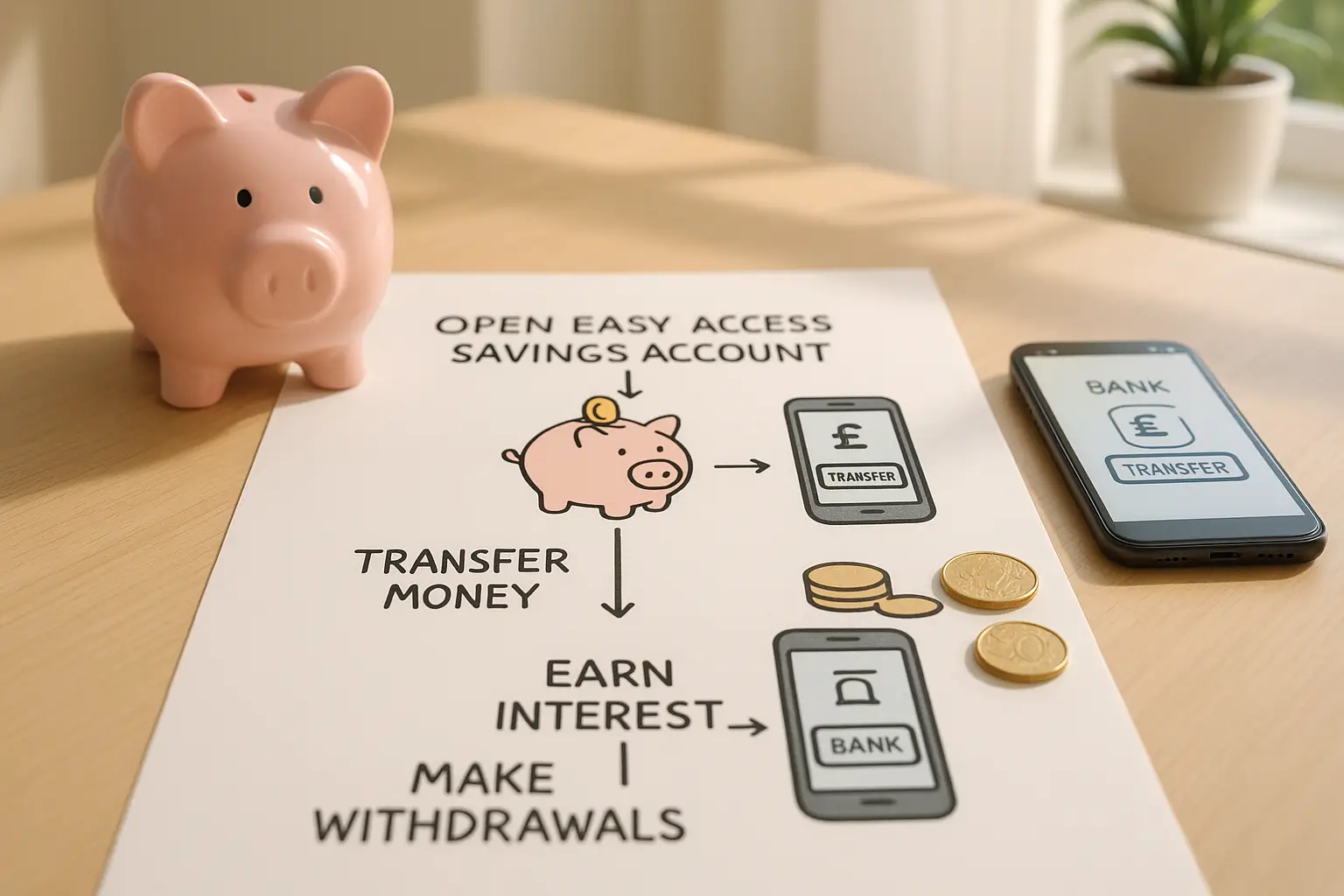
Easy access savings accounts allow you to withdraw money at any time without penalties, making them ideal for savers who need flexibility. These accounts offer variable interest rates that can change with the market, typically providing instant or same-day access to funds. Unlike fixed-rate options, they suit those building an emergency fund or saving for short-term goals.
Key features and benefits
The main benefit is unrestricted withdrawals, often limited only by the provider’s notice period, which is usually none for easy access types. Interest is calculated daily and paid monthly or annually, using AER (Annual Equivalent Rate), a standardised figure showing the true return if interest is left in the account. Providers like UK banks and building societies offer these, with top rates reaching 4.75% AER as of November 2025, according to MoneySavingExpert.
Differences from fixed-rate accounts
Fixed-rate accounts lock your money for a set period, offering stable but often lower rates than current easy access options, such as 4.55% for one year. While easy access provides liquidity, fixed deals suit those who can commit funds longer without needing access. To compare savings accounts fully, consider if flexibility outweighs potentially higher locked-in returns; for more on fixed options, see our guide on best easy access savings.
Who should consider them
These accounts work best for beginners or those with unpredictable expenses, like families or homeowners. If you’re comparing savings accounts UK-wide, easy access is perfect for amounts under £85,000 protected by the FSCS. Avoid them if you can lock away cash for better yields elsewhere.
Factors to consider when comparing
When you compare easy access savings accounts, prioritise interest rates, access terms and safety to find the best fit for your needs. Top rates currently exceed 4.5% AER, but always check variable changes and eligibility. Other key elements include fees, minimum deposits and tax efficiency.
Interest rates and AER explained
AER represents the annual rate including compounding, making it easier to compare savings accounts interest rates across providers. For instance, a 4.50% AER on £10,000 could earn around £450 yearly, but rates vary; the average is 3.5% while inflation sits at 3.8%, eroding real returns per money.co.uk data from 2025. Focus on variable rates that track the Bank of England base, and use tools to compare interest rates on savings accounts for the latest figures.
Access and withdrawal terms
Look for instant access with no limits or notice, though some cap free withdrawals at a few per year. Compare instant access savings accounts to ensure funds are available within one working day, avoiding hidden penalties that reduce flexibility.
Safety and FSCS protection
All UK-regulated easy access accounts are protected up to £85,000 per person per institution by the Financial Services Compensation Scheme (FSCS), a government-backed safety net detailed on their official site. When comparing savings accounts UK, verify the provider’s FSCS coverage to safeguard your money against bank failure.
Fees and minimum deposits
Many have no fees, but check for minimum deposits starting from £1 to £10,000. Higher minimums might offer better rates, so balance this in your comparison of savings accounts easy access options.
Tax considerations
Interest is taxable, but the Personal Savings Allowance gives £1,000 tax-free for basic-rate taxpayers and £500 for higher-rate ones, per HMRC guidelines. Exceed this and you’ll pay income tax; consider tax-free alternatives like Cash ISAs if your savings generate over the allowance.
Step-by-step guide to comparing accounts
To compare easy access savings accounts effectively, start by assessing your savings goals and using reliable tools for up-to-date rates. This process takes under an hour and can boost your returns significantly in 2025’s market.
Step 1: Define your goals
Determine how much you plan to save and how often you’ll need access. For emergency funds, prioritise liquidity; for larger sums, focus on higher AER to beat inflation.
Step 2: Use comparison tools
Visit independent sites to compare savings accounts UK, filtering for easy access with minimum deposits matching your budget. Look at AER, withdrawal limits and provider ratings.
Step 3: Check provider eligibility
Review age, residency and existing customer requirements. Online-only banks often offer top rates but check app usability.
Step 4: Calculate potential earnings
Use online calculators to project interest; for £10,000 at 4.5% AER, expect £450 annually before tax. Factor in PSA limits from HMRC.
Step 5: Switch accounts
Many providers offer switch services with bonuses. Monitor rates quarterly, as they fluctuate.
| Provider | AER (%) | Minimum Deposit | Withdrawal Limits |
|---|---|---|---|
| Chip | 4.75 | £1 | Unlimited |
| Trading 212 | 4.50 | £1 | Instant |
| Plum | 4.50 | £100 | Unlimited |
| Chase | 4.10 | £1 | Unlimited |
| Barclays | 3.50 | £1 | Instant |
Rates sourced from Moneyfactscompare and subject to change; verify current offers.
For the latest, check our best easy access savings rates.
Top easy access accounts in the UK
The highest easy access rates hit 4.75% AER in 2025, available from challenger banks, beating high-street averages. Providers like Chip and Trading 212 lead, but expect variability tied to base rates.
Current best rates
As per MoneySavingExpert updates, 4.75% requires app-based setup, while 4.50% suits instant access needs. Compare business savings accounts separately if applicable.
Provider comparisons
Building societies like Yorkshire offer 4.00% with branch access, contrasting online-only perks. For children’s options, see dedicated easy access savings account guides.
Updates for 2025
With base rate cuts possible, top rates may dip below 4.5%; regular savers hit 7% but limit access, per The Independent.
Common mistakes to avoid
Don’t chase the highest rate without checking access terms, as variable drops can surprise you. Always verify FSCS and tax implications to protect gains.
Ignoring variable rates
Rates can fall quickly; compare savings accounts regularly, not just once.
Overlooking tax allowances
Basic-rate savers often forget the £1,000 PSA, leading to unnecessary tax. Use it fully before ISAs.
Not verifying FSCS
Spread savings over institutions to maximise £85,000 protection.
Frequently asked questions
What is the best easy access savings account?
The best easy access savings account depends on your priorities, but top picks like Chip at 4.75% AER offer great flexibility for UK savers in 2025. These outperform averages by providing instant access without minimums, ideal for emergency funds. Always compare easy access savings accounts using tools from Moneyfactscompare to ensure it matches your deposit size and withdrawal needs, as rates change daily.
How do I compare savings account interest rates?
To compare savings account interest rates, focus on AER for a fair view, filtering by easy access on UK sites like MoneySavingExpert. Calculate projected earnings for your balance, considering tax via the PSA, and check variable rate histories to predict stability. This step-by-step approach helps beginners avoid low-yield traps, maximising returns above inflation.
What is AER in savings accounts?
AER, or Annual Equivalent Rate, is the standardised interest rate showing yearly earnings with compounding, making it essential when you compare interest rates on savings accounts. It accounts for how often interest is added, unlike gross rates, so a 4.5% AER might equal more than a simple 4.5% quoted elsewhere. Understanding AER empowers intermediate savers to select truly competitive easy access options without misleading figures.
Are easy access savings accounts safe?
Easy access savings accounts are safe if held with UK-authorised providers under FSCS protection, covering up to £85,000 per institution against failure. Government backing ensures low risk for most savers, but diversify if over that limit and avoid unregulated offshore deals. For YMYL peace of mind, verify FSCS on the provider’s site before depositing.
How much interest will I earn on £10,000?
On £10,000 in a top easy access account at 4.5% AER, you’d earn about £450 yearly before tax, assuming no withdrawals. Basic-rate taxpayers keep most tax-free under the £1,000 PSA, but higher earners might lose £90 to tax, netting £360. Compare savings accounts UK to find rates beating inflation, and use calculators for precise after-tax scenarios.
Can I transfer my savings without losing interest?
Yes, transferring easy access savings via the Current Account Switch Service or direct often preserves accrued interest, taking 7 days with no penalties. Check for bonuses on switches, but verify the new account’s rate to avoid drops. This strategy suits active savers comparing regular savings accounts, ensuring seamless moves without gaps in earnings.