What is an easy access savings account?
An easy access savings account is a type of savings account that allows you to withdraw your money at any time without notice or penalty, making it ideal for those who need flexibility alongside earning interest. These accounts are popular in the UK for building emergency funds or short-term savings, offering variable interest rates that can change based on market conditions. Unlike more restrictive options, they provide instant access to funds, which is key for savers who value liquidity over higher locked-in returns.
Definition and key features
The core feature of an easy access savings account is its withdrawal flexibility, often allowing transfers on the same day or within 24 hours. Most accounts have no fixed term, meaning you can deposit and withdraw freely, though some may impose limits like a maximum number of withdrawals per year. Minimum deposits are typically low, starting from £1, and interest is usually calculated daily or monthly on your balance. This setup suits beginners looking for a straightforward way to grow savings without commitment.
How interest works
Interest in an easy access savings account is paid as a variable rate, often quoted as AER (Annual Equivalent Rate), which shows the effective yearly return including compounding. For example, on a £10,000 balance at a 4% AER, you could earn around £400 annually, calculated daily and added to your account monthly or yearly. Rates are variable, so they can rise or fall with the Bank of England’s base rate, affecting monthly interest payouts. Providers like Santander offer easy access savings accounts with competitive variable rates, but always check the latest figures.
Differences from fixed-rate accounts
Unlike fixed-rate savings accounts, which lock your money for a set period in exchange for a guaranteed rate, easy access options prioritise freedom over stability. Fixed accounts might offer higher returns, such as 4.55% for one year, but early withdrawals incur penalties. Easy access accounts, with rates up to 4.50% AER as of late 2025, allow you to switch providers if better deals emerge, like high interest easy access savings accounts. This makes them better for uncertain financial needs rather than long-term goals.
Pros of easy access savings accounts
The main advantage of an easy access savings account is its balance of earning potential and accessibility, allowing savers to respond quickly to life changes without losing out on interest. They are protected by the Financial Services Compensation Scheme (FSCS) up to £85,000 per person per institution, adding security for everyday use. Overall, these accounts support flexible saving habits common among UK adults holding over £200 billion in such deposits as of 2024.
Flexibility and liquidity
You can access your funds anytime, often instantly via online banking, which is perfect for emergencies or opportunities like a home deposit. This liquidity means no penalties for withdrawals, unlike notice or fixed accounts, keeping your money working for you without restrictions. For instance, if rates drop, you can easily move to a better easy access savings account without hassle.
No lock-in periods
Without a fixed term, these accounts let you deposit irregular amounts and withdraw as needed, suiting variable incomes. This freedom encourages consistent saving without the fear of penalties, making them a go-to for beginners. Providers often allow unlimited deposits, helping build habits over time.
Potential for higher introductory rates
Some easy access savings accounts offer bonus rates for new customers, like 4.75% for the first few months if you switch via apps as recommended by experts. These can beat standard variable rates, providing a short-term boost. However, bonuses end, so monitor for sustainability.
Cons of easy access savings accounts
While convenient, easy access savings accounts can expose you to rate fluctuations, potentially reducing returns compared to fixed alternatives. Tax on interest may apply beyond allowances, and lower baseline rates mean they suit short-term needs over aggressive growth. Average rates have dipped to 3.5-4% by 2025 from 4.25% in 2023 due to base rate cuts.
Variable interest rates
Rates can decrease unexpectedly, lowering your earnings if the base rate falls. For example, a drop from 4.5% could reduce annual interest on £10,000 by £50 or more. This variability requires regular checks to ensure your savings account easy access remains competitive.
Tax on interest earnings
Interest is taxable above the Personal Savings Allowance (PSA): £1,000 tax-free for basic-rate taxpayers. Higher earners get £500, and additional-rate none, so large balances may trigger tax. Use the GOV.UK PSA guide to calculate your liability and consider tax-free ISAs as alternatives.
Lower rates than fixed options
Fixed-rate accounts often pay more for commitment, with easy access typically lagging behind at around 4% versus 4.55% fixed. This trade-off suits flexibility seekers but not those willing to lock funds. For the best returns, compare with fixed options periodically.
| Aspect | Pro | Con |
|---|---|---|
| Access | Withdraw anytime without penalty | May have withdrawal limits with some providers |
| Rates | Potential introductory bonuses up to 4.75% | Variable and often lower than fixed (3.5-4.5% AER) |
| Tax | Tax-free up to PSA (£1,000 for basic rate) | Tax on excess interest earnings |
| Security | FSCS protection up to £85,000 | Rate drops can erode real returns with inflation |
Types of easy access savings accounts
Easy access savings accounts come in variants to fit different needs, from personal to business use, all maintaining core flexibility. Personal options dominate, but joint and online versions add convenience for couples or digital-savvy users. Business accounts cater to small firms, often with higher limits.
Personal vs joint accounts
Personal easy access savings accounts are for individuals, while joint ones allow shared access for couples, splitting interest for tax efficiency. Joint easy access savings accounts can double PSA benefits if both are basic-rate taxpayers. Choose based on ownership needs, ensuring FSCS covers the total.
Business easy access accounts
These suit small businesses with variable cash flow, offering easy withdrawals for operational needs. Rates are similar to personal but may require a business bank account link. Providers like Halifax provide options, but check for minimum balances.
Online-only options
Online easy access savings accounts, such as those from Chase UK, offer higher rates due to lower overheads and app-based management. Access is fully digital, with instant transfers, appealing for tech users. They often feature no branches but robust security.
How to choose the right easy access savings account
To select an easy access savings account, prioritise your withdrawal frequency, balance size, and tax status, aiming for rates around 4.5% AER while ensuring FSCS protection. Compare factors like minimum deposits and access methods without fixating on the absolute best easy access savings account, as needs vary. Follow steps to open securely.
Factors to consider
Assess interest rates, fees, and ease of access; for high interest easy access savings account seekers, look for bonuses but verify post-intro rates. Consider online versus branch, with providers like Santander easy access savings accounts blending both. Link to our best easy access savings guide for more insights.
Checking FSCS protection
Verify the provider is UK-regulated and FSCS-covered up to £85,000; check via the FCA savings data. This safeguards deposits if the bank fails, a key safety net. Avoid non-UK firms without equivalent protection.
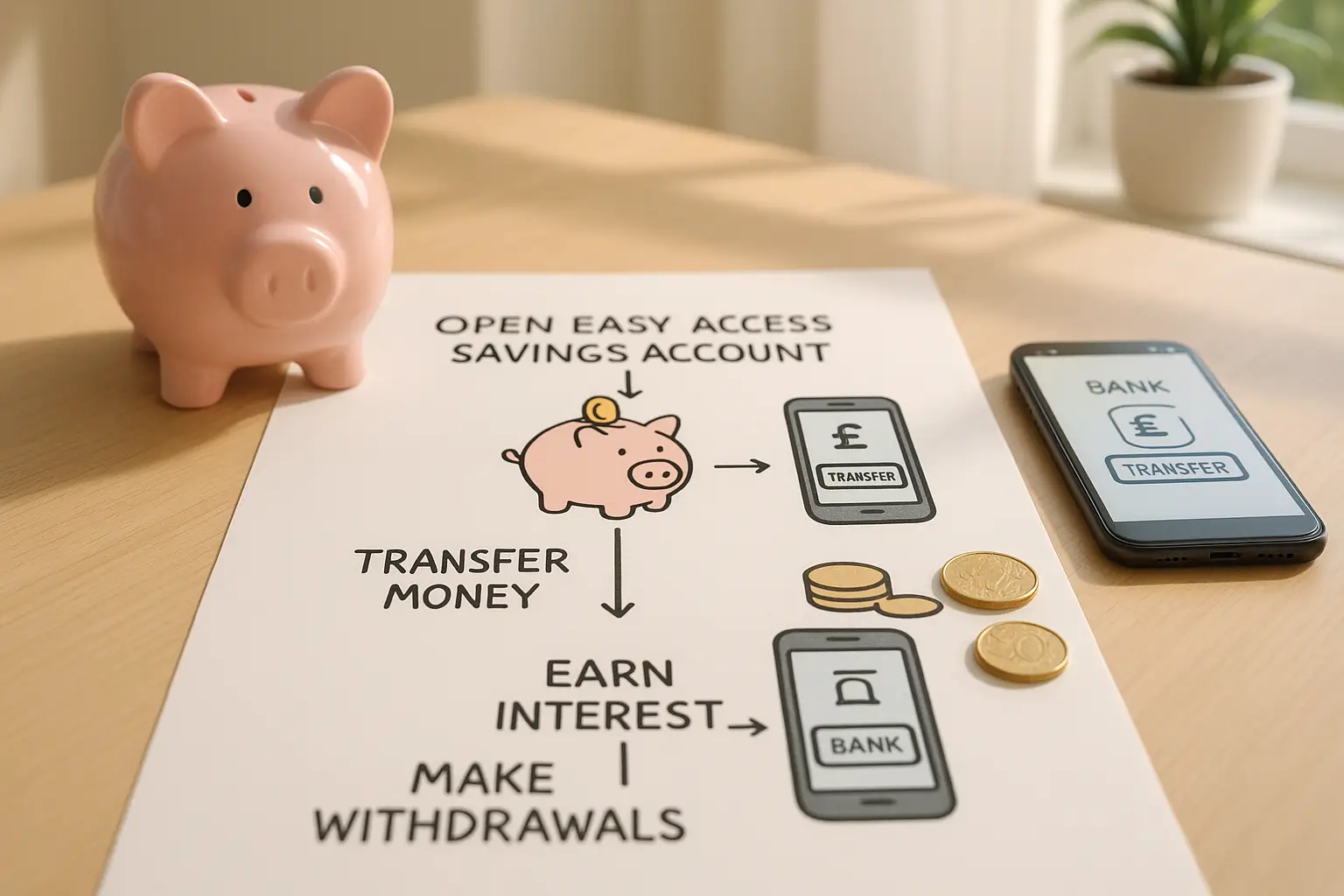
Steps to open an account
- Research providers using sites like Moneyfactscompare for current AERs up to 4.50%.
- Gather ID and proof of address; decide on personal, joint, or business.
- Apply online or in-branch, deposit funds, and set up transfers.
- Monitor rates and switch if better, like via MoneySavingExpert tips.
Tip: Use a savings calculator to estimate earnings; for £5,000 at 4% AER, expect £200 yearly. Review annually to beat inflation.
Frequently asked questions
What is an easy access savings account?
An easy access savings account lets you deposit and withdraw money freely without notice periods or penalties, earning variable interest on your balance. It’s designed for UK savers needing quick access, differing from fixed accounts by prioritising flexibility. With over 10 million users and £200 billion in deposits as of 2024, they’re a staple for emergency funds, protected by FSCS up to £85,000.
What are the pros and cons of easy access savings accounts?
Pros include instant withdrawals, no lock-ins, and potential bonuses up to 4.75%, suiting short-term goals. Cons involve variable rates that can fall to 3.5-4%, tax on interest beyond PSA, and lower yields than fixed options. Balance these by assessing your liquidity needs against return goals for optimal use.
How much interest do easy access savings accounts pay?
Current rates range from 3.5% to 4.50% AER, with top easy access rates at 4.75% for switchers as of 2025. Interest calculates daily on balances, paid monthly or annually, so larger deposits earn more. Factors like provider and market changes affect this; check Money.co.uk for updates without expecting fixed returns.
Are easy access savings accounts safe?
Yes, if from UK-authorised providers, they’re covered by FSCS up to £85,000 per person, protecting against bank failure. The FCA regulates them, ensuring fair practices, and funds are ring-fenced from the bank’s trading. For extra security, spread savings across institutions and avoid exceeding limits.
Can I withdraw money from an easy access savings account anytime?
Typically yes, with instant or same-day access via online banking, though some limit free withdrawals yearly. This distinguishes them from notice accounts requiring advance warning. Always review terms to avoid fees, ensuring they fit your cash flow patterns.
Do you pay tax on easy access savings account interest?
Interest is tax-free up to your PSA: £1,000 for basic-rate (20%), £500 for higher-rate (40%), and none for additional-rate taxpayers. Excess is taxed via self-assessment or adjusted PAYE code. For joint easy access savings accounts, interest splits, potentially maximising allowances; consult HMRC for personalised advice.
How to choose an easy access joint savings account?
Look for providers allowing shared access with split interest reporting for tax benefits, like doubling PSA for couples. Ensure FSCS covers the joint balance up to £85,000 per holder. Compare rates and online ease, avoiding those with high minimums that don’t suit shared finances.
What about easy access business savings accounts?
These offer flexibility for business cash flow, with rates similar to personal but higher deposit limits, often requiring a linked current account. They’re not FSCS-protected for businesses over £85,000, so diversify. Ideal for SMEs, they support irregular deposits without penalties, but rates vary by provider like Chase UK.